Chongqing, a Sheltered City
What is dug into the terrains doesn't vanish as a war ends.
Shelters and tunnels remain a significant part of Chongqing, long after the end of WWII.
1. Continuation:
1950s - 1970s
Continued construction of defence shelters and tunnels, built on WWII remnants

Major Civil Air Defence Works Refurbished or Built in 1950s - 1970s
Major Civil Air Defence Works (CADW) in Chongqing
After World War II, Chongqing did not abandon its sprawling network of air raid shelters. Instead, the government refurbished and expanded the tunnels, systematically integrating them into a coordinated Major Civil Air Defence system.
Driven by intense Cold War geopolitical tensions and a constant threat of a nuclear attack, China began the "Third Front" strategy—a grand effort to relocate defence and industries into the mountainous interior of Southwest China. Chongqing became a central hub of the Third Front.
Unlike the hastily dug and poorly managed public shelters of WWII, the post-war civil defence initiative treated the underground as a parallel city. The strategy shifted from merely hiding from bombs to striving for continued industrial production even if under attack. Chongqing created a subterranean matrix designed to withstand modern warfare.
More Information on Civil Air Defence Works (CADW)
Click here to see location of major CADWs and how they are integrated into the city of Chongqing
2. Rebirth:
1980s - Now
As war concerns fade, shelters and tunnels were repurposed into vessels for historical memorialisation, or as commercial spots, transport tunnels, or cooling spots, for the residents of Chongqing.
Historical Memorialisation
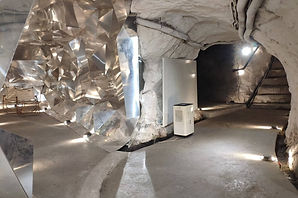
Chongqing's wartime shelters are repurposed into war memorials, peace education sites, and museums about not only war history but also other aspects of history and culture.
Of these, the Museum Cluster of Jianchuan is a prime example of history and education embedded in previous shelters.
Chongqing Museum Cluster of Jianchuan
The site of the Chongqing Museum Cluster of Jianchuan contains 51 air-raid shelters and was the location of Arsenal No. 1 under the Ordnance Department of the Nationalist Government during WWII, to which one museum in the cluster, comprising of 3 shelters, was dedicated.
The cluster comprises 11 themed museums:
The Site of Ordnance Department Factory No. 1 (Hanyang Arsenal) Museum
The Museum of War of Resistance Relics
The Museum of the Development History of Weaponry
The Folk Blessing Culture Museum
The Chongqing Story Museum
The Chinese "Double Happiness" Culture Museum
The Traditional Chinese Medicine Culture Museum
The Museum of Ration Coupons and Everyday Life
The "Marching Forward — 70 Years of Folk Memory in New China" Museum
The Chongqing Civil Air Defence History Exhibition
The Migrant Workers and Urbanisation Exhibition

Themed Museums
and Exhibitions:

Commercial Spots
The city of Chongqing brings in millions of tourists every year. For tourists and for locals, being able to eat, drink, rest or shop in a wartime shelter is a fresh experience, as well as part of Chongqing's charm.

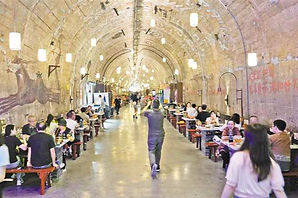
Hotpot Restaurants
Chongqing has turned its air raid shelters into hotpot restaurants, where diners gather underground in the same tunnels that once sheltered the city from wartime bombing. Hotpot is central to Chongqing's identity, and these wartime relics are incorporated into living symbols of the city's communal and fiery culinary culture. the city's largest underground hotpot restaurant comprises of 18 shelters and can seat over 1,000 diners.
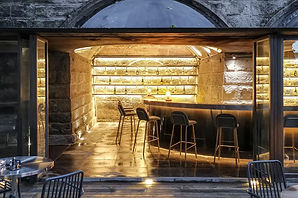
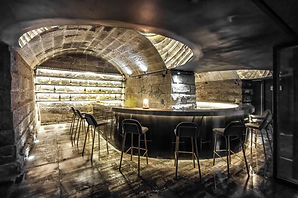
Cultural and Creative Parks & Bars
Chongqing has two major cultural and creative parks built on abandoned factories. The shelters of these factories are now unique canvases of artistic creation. The bars and studios in the parks take up the challenge and carve the shelters into tasteful and elegant spaces.
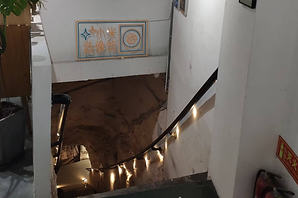
Cafés
Of course, shelters are also repurposed into cafés. For example, this café in Chongqing's Mountain City Walking Trail looks just like any other café, with eloquent tables and photographies hanging on the walls. However, there is one thing unique, which is that there is a tunnel behind the bar that opens almost vertically into an underground shelter. The shelter was said to store food during WWII, and now hosts art shows and photo exhibitions.
Transport Tunnels
Chongqing is a populous and rugged city that often experiences heavy traffic. Chongqing's Light Rail Line 1 was built based on a wartime tunnel and shelter cluster. The more recent Liberation Monument Underground Ring was also built based on wartime tunnels in the city centre.
The Liberation Monument Underground Ring Road (Jiafangbeidixiahuan Ave., 解放碑地下环道) is positioned in one of Chongqing's densest areas. The first and second term projects of the ring was opened in March 2017, and the third term project was opened in July 2023. The ring road worked to reduce the heavy traffic above ground.

Chongqing has a well-connected underground subway network, which wartime shelters and tunnels helped construct. Notably, a considerable part of one of Chongqing's first rail lines, Light Rail Line 1, was based on wartime shelters and tunnels.


Cooling Centres
Chongqing, located at the southwest of China, is a city known for its hot and humid weather during the summer. Shelters became suitable spaces for cooling and relaxation.
Unlike wartime, the shelters are now well-ventilated and well-furnished. After decades of construction and government support, wartime shelters and tunnels are now, supplied with iced water, table and seating, can serve as alternatives to city parks where residents can relax and hang out.
The shelters united Chongqing during WWII, through memories of all kinds. But now, peacefully, the shelters can bind the people of Chongqing with memories of comfort and delight.