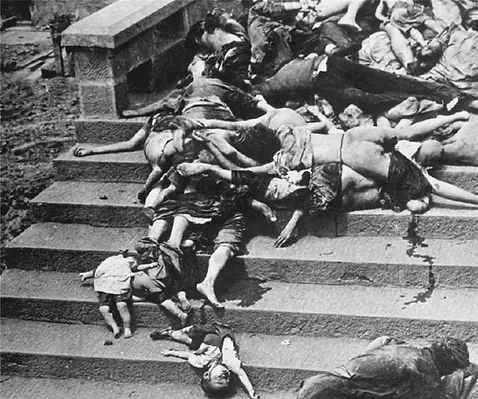
The hardships along the way caused my grandfather and grandmother great suffering. They blamed my father for bringing them to flee, saying he shouldn't have taken them from home. They said that it would be better for them if the bomb dropped on Wuhan fell on their heads, so their lives could have just ended. Now they lived in constant fear of falling into the water and getting drowned. if they were going to die, they'd rather die in their hometown, die in their own home.
—Huang Chengfa, born in Wuhan, 1938
一路的艰难,让我爷爷、婆婆很痛苦,他们埋怨我父亲,不该把他们两个带出来。他们说,上次武汉那颗炸弹,要是丢在他们头上还好些,死了就完了,现在成天担心落到水里淹死。死,还不如死在家乡、死在屋里。
—黄成法,1938年生于武汉
After the “5.3” “5.4” (3rd and 4th of May) bombings, not only city peoplethe people living in the city needed to runran to for air raid shelters whenever the air raid siren went off, even us in the Lengshui town needed to run as well. I remember every time when the siren went off, I would hold onto the hem of my mom’s shirt, running to the field behind our yard and hidinge under the bean trellises made of bamboo. We were very ignorant about air raids then. We thought we would be safe under the bean trellises.
—Mo Guojun, student, born in Chongqing in 1929
1939年的“五三”“五四”大轰炸后,不光是城里人要跑空袭警报,连我们冷水场也得跑。我记得每次警报响了,我就拉着我妈妈的衣衫角,跑到院子后面的菜地里,躲在四季豆架子下面。我们当时对空袭很无知,以为躲在竹子搭成的四季豆架下就安全了。
—莫国钧,女学生,1929年生于重庆